Once again, the start of this season has been mild and tricky for snow cover. While conditions above 2,000 metres have been excellent, below 1,200 metres the Christmas holidays passed with barely any snow at all… If a snowless holiday simply isn’t an option for you, here are 10 “snow-sure” ski resorts. By that, we mean resorts where snow cover almost never lets you down from December through to April.
No resort offers an actual snow guarantee
In the Alps, no ski resort currently offers an actual snow guarantee. Such guarantees did exist in the past, promising to refund your lift pass if fewer than a certain percentage of pistes were open. The reason they no longer exist is that the risk was simply too great: a resort would have to refund thousands of lift passes if it sold the guarantee and the snow failed to show up. That said, some accommodation providers and travel agencies may still offer one, for an extra fee.
That said, France is still home to resorts with excellent snow cover and piste-opening rates, even in December. To find them, you need to head for altitude, where snow melts slowly and rain rarely gatecrashes the season.
To make the most of near-guaranteed snow, it’s also worth avoiding skiing before mid-December or right at the tail end of the season. For those periods, we’d recommend booking at the last minute instead.
Latitude naturally plays a role too. Resorts in the Southern Alps generally see a little less snow than those in Savoie, which in turn get less rainfall than those in Haute-Savoie. There’s also a west-to-east gradient, with more precipitation on the western side of the Alps than on the eastern side.
Top 10 snow-sure ski resorts
Here’s our top 10 snow-sure ski resorts in the Alps. All set at high altitude, they benefit from well-snowed pistes, and sometimes from delightfully sunny winter weather too — Alpe d’Huez, La Rosière and Montgenèvre being good examples. Some, such as Alpe d’Huez, Chamonix, La Rosière and Montgenèvre, have south-facing pistes, combining sunny skiing with near-guaranteed snow.
10. Bonneval-sur-Arc

A pretty village officially listed among the most beautiful in France, Bonneval sits in the Haute-Maurienne at 1,800 metres altitude, right by the Italian border and close to the Hautes-Alpes. Here, as in the Hautes-Alpes, snow falls heavily during “easterly return” weather systems — Mediterranean-fed disturbances that spill over from the Italian border. Bonneval also sits deep in the valley floor, so snow lingers for a long time on the village’s charming rooftops. Skiing here takes place across a small ski area, between 1,800m and 3,000m altitude.
9. Montgenèvre
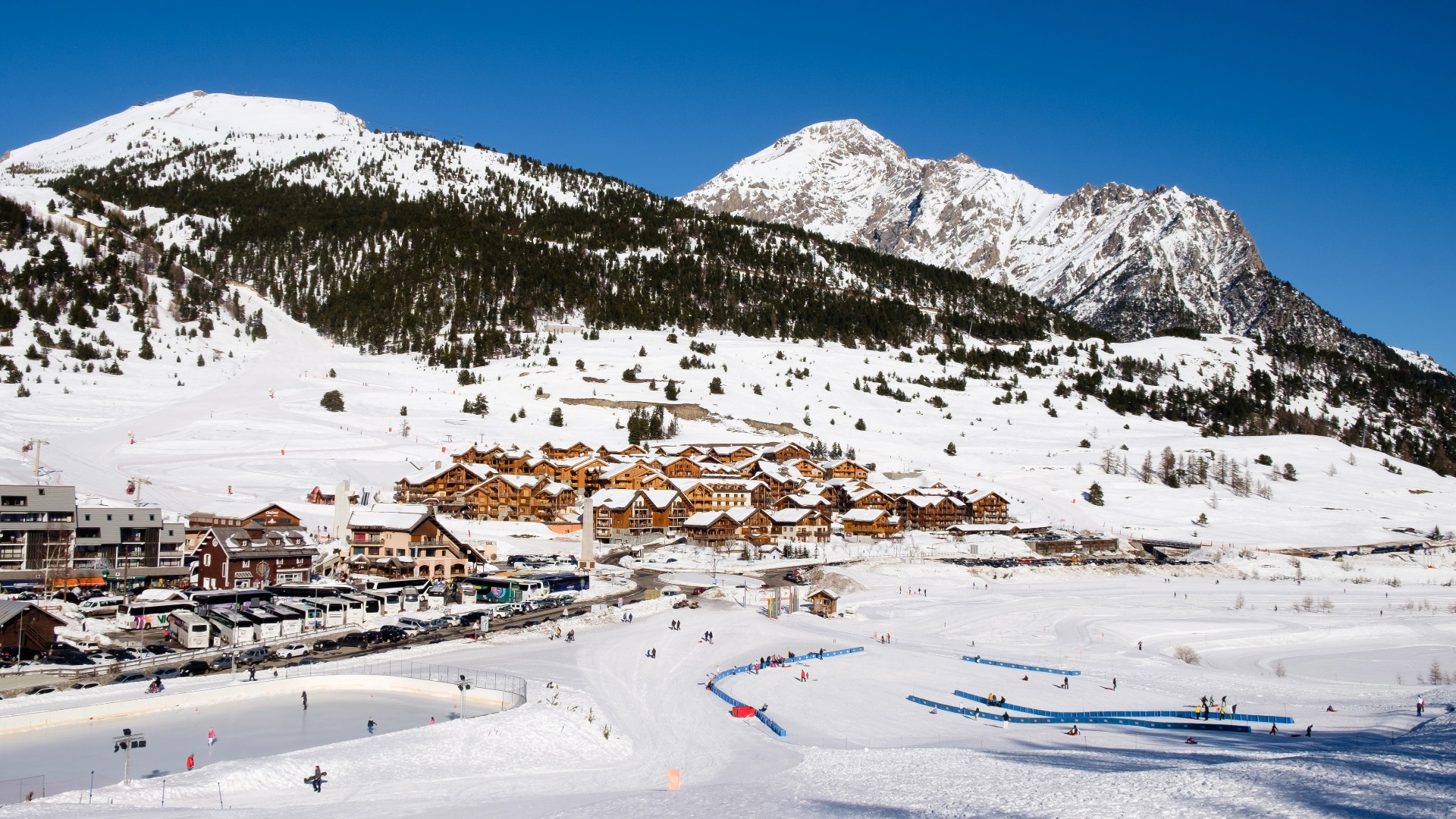
Sitting between the Northern and Southern Alps, but firmly on the Hautes-Alpes side and right on the Italian border, Montgenèvre often opens in November and stays open until the end of April. Very sunny, the resort strikes a good balance between snow and sunshine. It doesn’t quite match the snow depths of the Northern Alps, but its pistes rarely close. That’s partly down to sitting at 1,800 metres, with a lovely north-facing ski area that holds onto its snow well. Montgenèvre is also a beautiful village, with sun-drenched terraces perfect for recharging your batteries in the heart of winter.
8. Alpe d’Huez

South of Grenoble, Alpe d’Huez offers sun-drenched skiing above 1,800 metres altitude. While it sees a little less snow than some of the resorts below on this list, it has never actually run short. Its pistes climb all the way up to 3,300 metres, to the top of the Grandes Rousses massif.
7. La Rosière
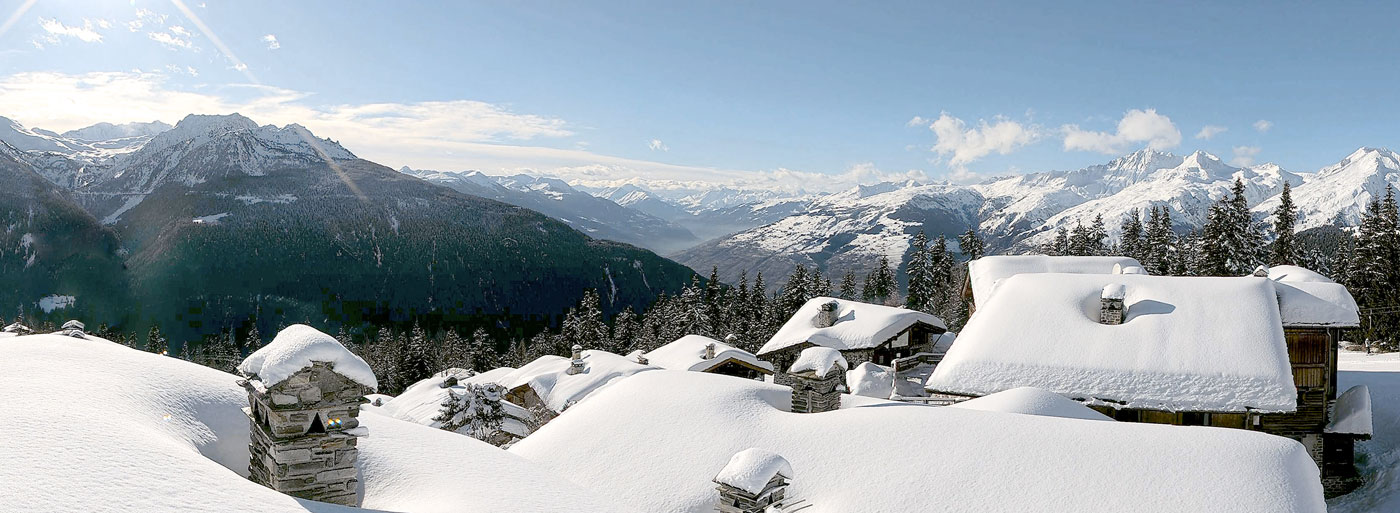
In the upper Tarentaise, directly opposite Les Arcs, La Rosière is a border resort that lets you ski across into Italy, on the La Thuile ski area in the Aosta Valley. The resort’s big advantage is sunny skiing between 1,800 and 2,800 metres altitude. It’s a fairly upmarket resort, though a touch more affordable than the top 6 on our list. Despite being a relatively recent resort, La Rosière also has the advantage of a genuinely pleasant village feel.
6. Méribel
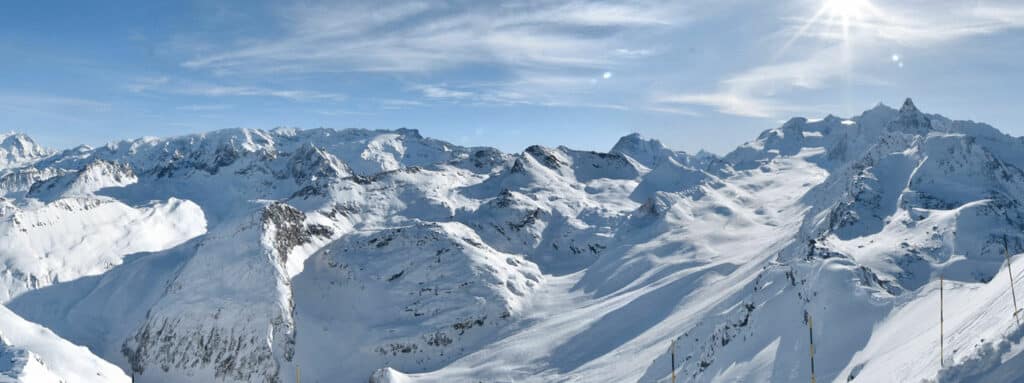
A north-facing valley, Méribel sits alongside Val Thorens and Courchevel. Snow cover here is generally very good. If you’re staying in Méribel-Mottaret, you’ll be skiing between 1,700m and over 3,000m altitude. Courchevel and the other resorts of Les 3 Vallées also enjoy good snow cover. Like the resorts still to come on this list, these are fairly expensive resorts.
5. Chamonix

While the town of Chamonix itself sits low and sees relatively little snow, its ski areas are higher up, in one of the wettest sectors of the Alps. The Mont-Blanc massif blocks disturbances coming in from the west, meaning the pistes of Les Grands Montets, Le Brévent and La Flégère enjoy excellent snow cover. Skiing here takes place between 1,800m and 2,770m altitude. Chamonix is also the capital of mountaineering and Alpine living — a chic, unmissable spot all year round.
4. Les Arcs
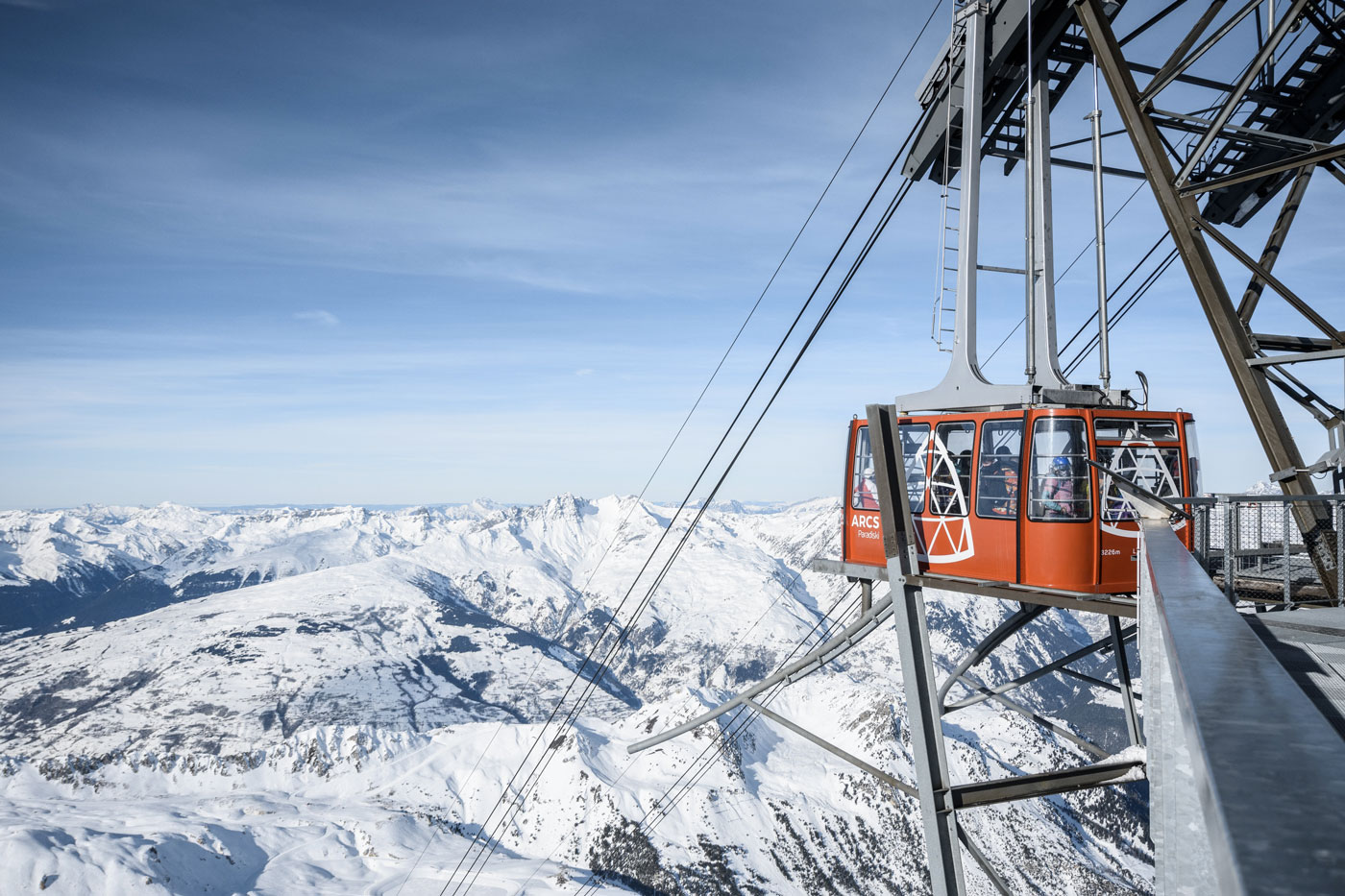
This is the resort that, according to our snow records, comes out as the best-snowed in the Alps. North-facing, in the Haute-Tarentaise, Les Arcs spreads its pistes between 1,620m and 3,220m altitude. The resort typically enjoys excellent snow cover from its late-December opening right through to the close of the season. It’s also a fashionable destination, with buildings and apartments designed in the 1970s by Charlotte Perriand. You’ll find plenty of high-end addresses here.
3. Avoriaz

The highest ski resort in Haute-Savoie, at 1,800 metres altitude, Avoriaz often holds the record for the deepest snow cover of any French resort. That’s largely down to its position right at the northern edge of the Alps, heavily exposed to westerly airflows. With its uniquely organic architecture — unlike anywhere else in France — the resort is entirely car-free. Its pistes don’t climb quite as high as the resorts mentioned above, though, topping out at just 2,277 metres.
2. Tignes & Val d’Isère
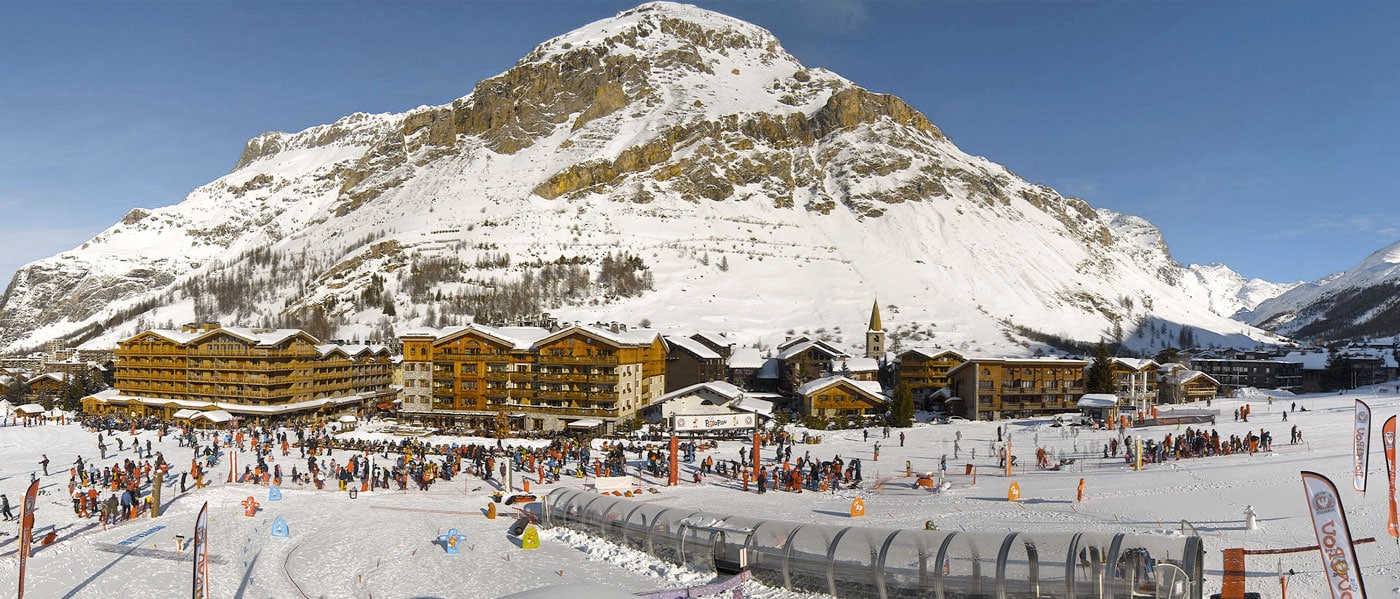
At the head of the Tarentaise valley, Tignes and Val d’Isère are two large resorts with interlinked pistes, forming one of the biggest and most highly regarded ski areas in France. Lifts here are state of the art, and the pistes wide and technical. Skiing takes place mainly between 1,800m and 3,400m altitude, on well-groomed snow that’s typically present from late November through to early May. Val d’Isère has a chic village feel, while Tignes is more modern and party-oriented. One sits at 1,800m, the other at 2,000m.
1. Val Thorens

At 2,300 metres altitude, Val Thorens is the highest ski resort in France. Skiing here reaches up to 3,200 metres, in a white amphitheatre of mountains from November to May. While the resort rarely suffers from a lack of snow, it isn’t actually the best-snowed resort in France. Sitting very high up and well inside the Alps, it typically gets over a metre of snow each winter. Its pistes link into the resorts of Les 3 Vallées, the largest ski area in France.
➡️ Also discover all our ski resorts and their altitudes.
Why does snow sometimes run short in the mountains?
To help guide your choice, it’s also worth understanding why snow sometimes falls short in the mountains. There are several explanations you’ve probably come across in recent years.
The first cause is often simple drought. October’s weather systems arrive as rain, and November and December turn out dry. In that case, there’s little or no snow in December. Resorts turn to snowmaking, and real snow eventually arrives in January. This was notably the situation in the winter of 2016–2017. Ultimately, it’s fairly normal. It’s inconvenient for your trip, but there’s still plenty to do, and the sunshine is there to enjoy.
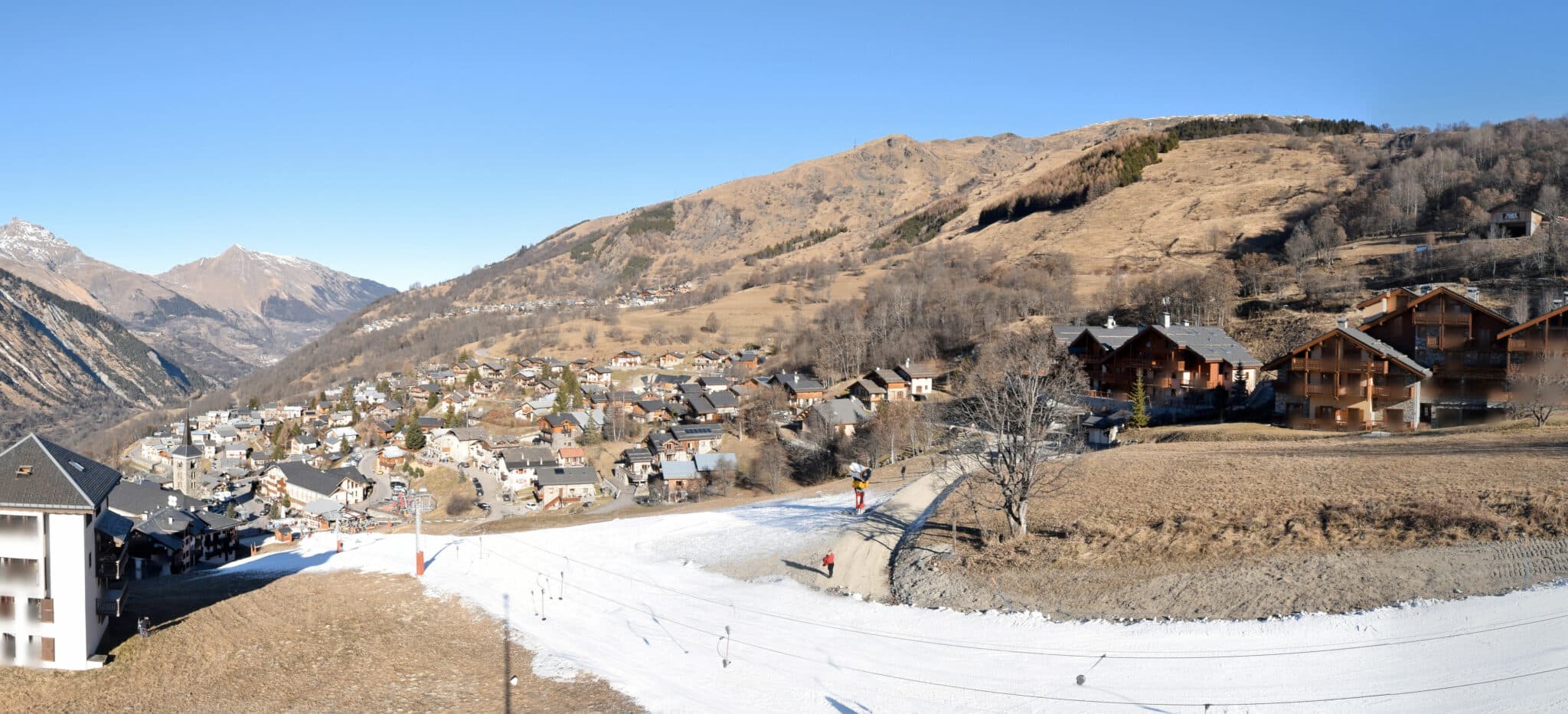
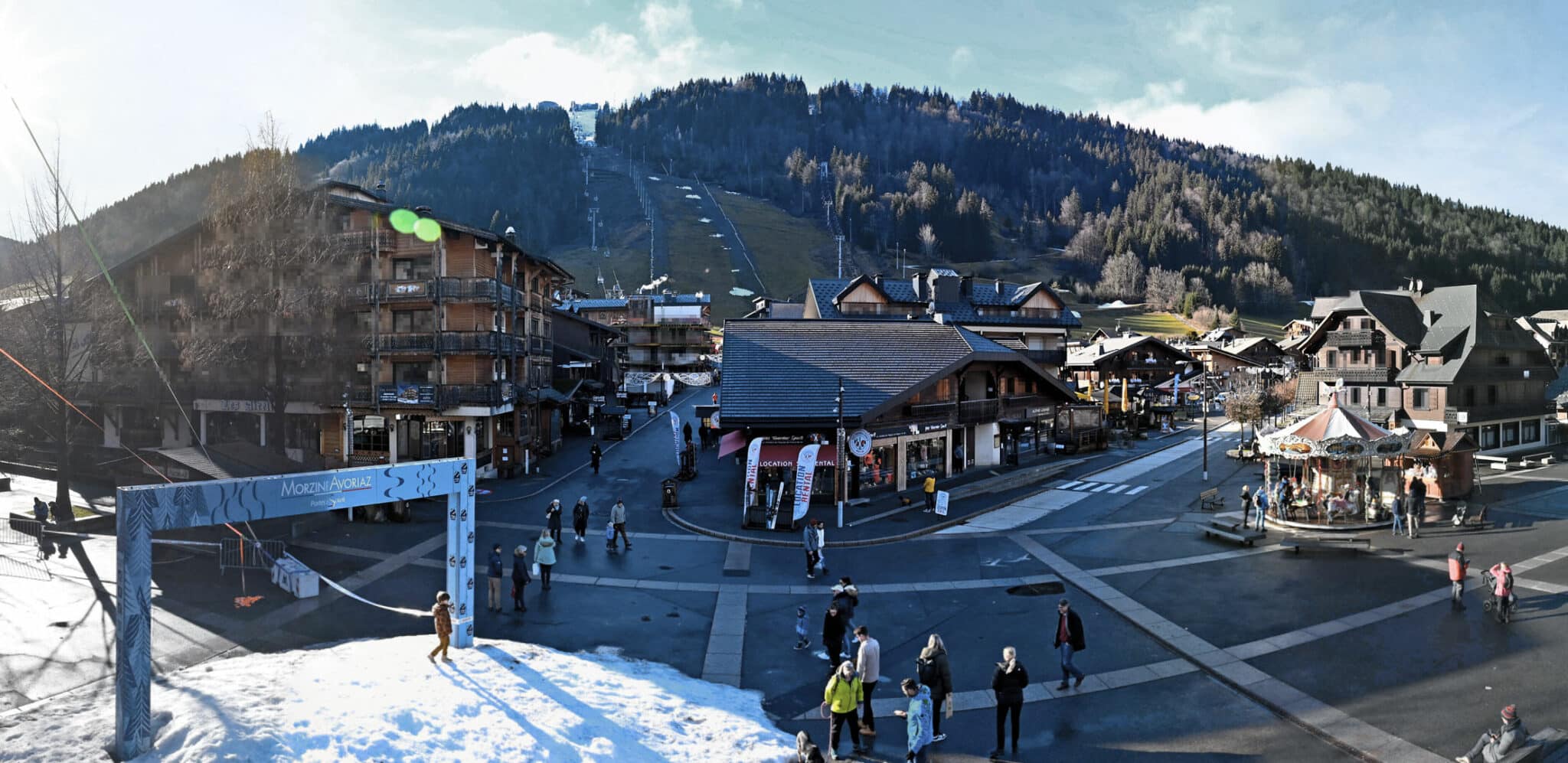
The second scenario is mildness: weather systems do cross the Alps, but the rain-snow limit never drops below 1,500 metres. Snow cover ends up good to excellent in a resort like Val d’Isère, for instance, but non-existent in Morzine or Gresse-en-Vercors. This happens when mild airflows arrive from the Atlantic, or even from the south-west. There’s really nothing resorts can do about it. It likely happened less often in the 1960s, when many of these resorts were first built, than it did in 2023. That said, these situations remain fairly rare.
The third scenario is what happened in December 2022 and late 2023: snow cover is actually fairly good at every altitude, but heavy rain then washes away that snowpack, sometimes above 2,000 metres. In that case, resorts simply can’t fight back. It’s manageable when the weather system is fairly mild in intensity and a freeze returns straight afterwards. It’s much worse when mild, showery weather settles in for a whole week. The resorts that fare best in this scenario are those least exposed to westerly airflows — the Haute-Maurienne, Haute-Tarentaise and Hautes-Alpes in particular.
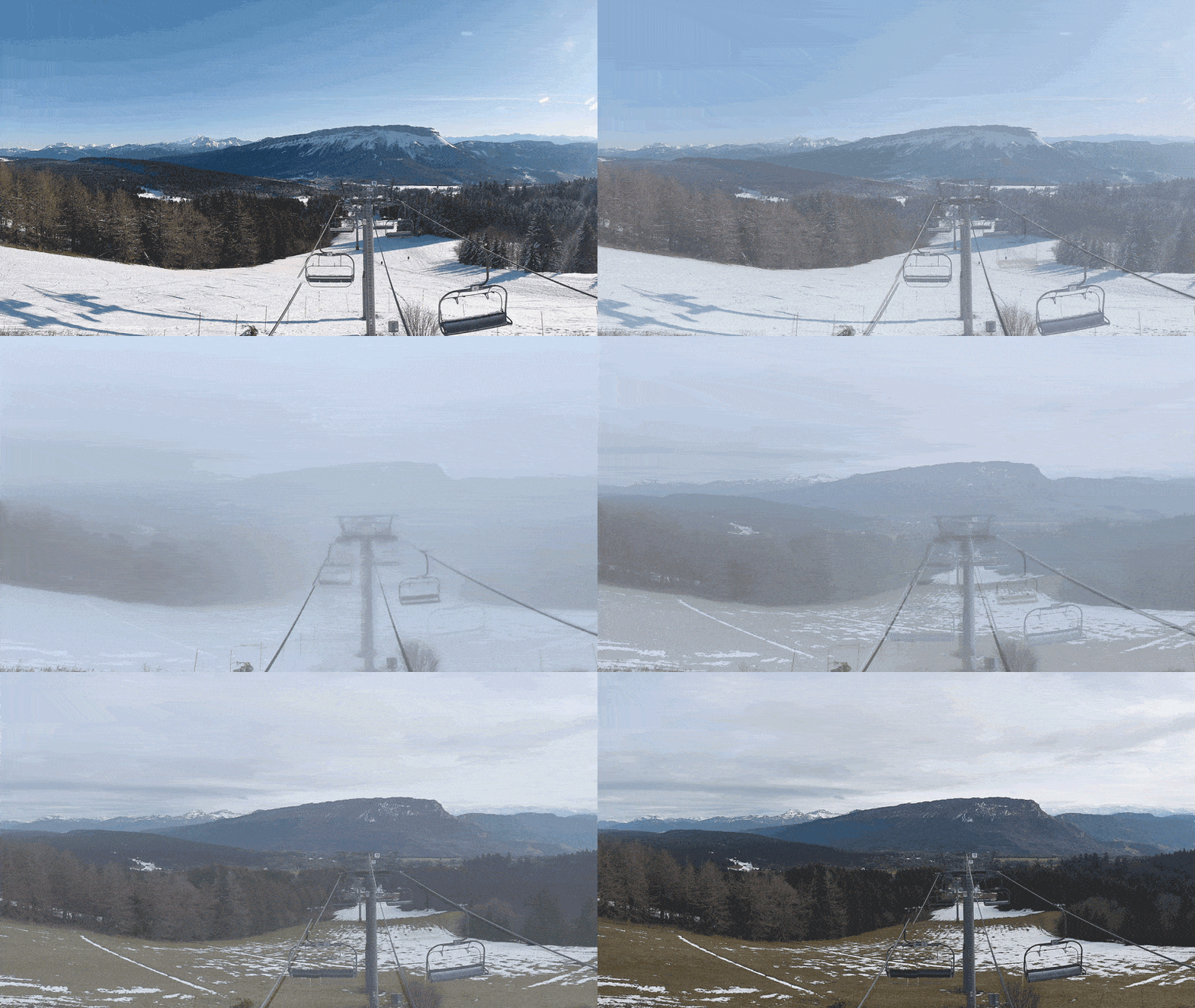
Of course, Alpine weather is a little more complex than that. Some valleys hold onto the cold well, while others stay milder. You get warm, dry south-facing slopes alongside bitterly cold north-facing ones. Some sectors receive impressive amounts of snow, while others are sheltered from westerly airflows. Forest cover also helps preserve snow, shielding it from direct sunlight.
Either way, since you’re only away for a week, the element of risk matters — both in terms of snow conditions and sunshine. If you head to Val d’Isère, La Rosière, Alpe d’Huez, Bonneval-sur-Arc or Montgenèvre, for example, you’ll certainly have a higher probability of both snow and sunshine… But your week’s skiing isn’t just a matter of probability. So choose somewhere that suits you, that you genuinely like, and enjoy your holiday!