The Alps are far more than just a collection of ski resorts; they shelter geological and botanical treasures that transform every hike into a unique sensory journey. From the towering peaks of Mont Blanc to the turquoise waters of the Verdon, this mountain range offers a diversity of panoramas unmatched in Europe. Whether you are seeking the mystical coolness of the waterfalls at the Cirque de Saint-Même, fascinated by the millennia-old rock engravings of the Vallée des Merveilles, or drawn to the legendary challenge of Mont Ventoux, this guide takes you on an exploration of 15 exceptional landscapes. Prepare to discover natural limestone fortresses, sparkling glacial lakes, and wild valleys where nature still reigns supreme. Here is our selection of the most beautiful alpine faces to experience on your next escape.
Sixt-Fer-à-Cheval and Its Thousand Waterfalls

At the very end of the Giffre Valley, just past Samoëns, Sixt-Fer-à-Cheval stands as a small paradise for mountain enthusiasts. On one side lies its magnificent amphitheatre, or cirque, from which countless waterfalls cascade down the cliff faces. On the other, the Cascade du Rouget commands attention—a colossal, roaring torrent of mountain water. Higher up, trails lead to the spectacular Chaine des Fiz. While the mountains are beautiful everywhere, this specific spot offers an extraordinary concentration of alpine majesty and remains an exceptional natural site.
Views over Lake Bourget from Mont du Chat

As the final link in the Jura chain, Mont du Chat towers over Lake Bourget from an altitude of 1,500 metres. It offers a shaded, pleasant, and technically straightforward walk leading up to Mollard Noir and the iconic Dent du Chat. From the summit, the view drops straight down onto the lake and opens up to a sweeping panorama of the Mont Blanc massif and the wider Alpine chain. Seasoned cyclists can tackle the ascent of Mont du Chat by bike, which stands as one of the steepest and most demanding climbs in the Alps. Alternatively, hikers can start on foot from Le Bourget-du-Lac to reach the Dent du Chat.
The Désert de Platé and Its Limestone Lapiaz Facing Mont Blanc

Accessible from either Passy or Flaine, the limestone pavement, or lapiaz, of the Désert de Platé is the largest of its kind in Europe. Facing Mont Blanc, it provides an otherworldly atmosphere for those willing to expend the effort required to reach it. Lapiaz formations result from the chemical erosion of limestone by rainwater combined with carbon dioxide released by surrounding vegetation. This process carves out a severely weathered topography filled with deep fissures and strange crevices. While found across the Prealps and the Jura, this particular site offers a striking and disconcerting landscape.
High-Mountain Vistas from the Col du Galibier
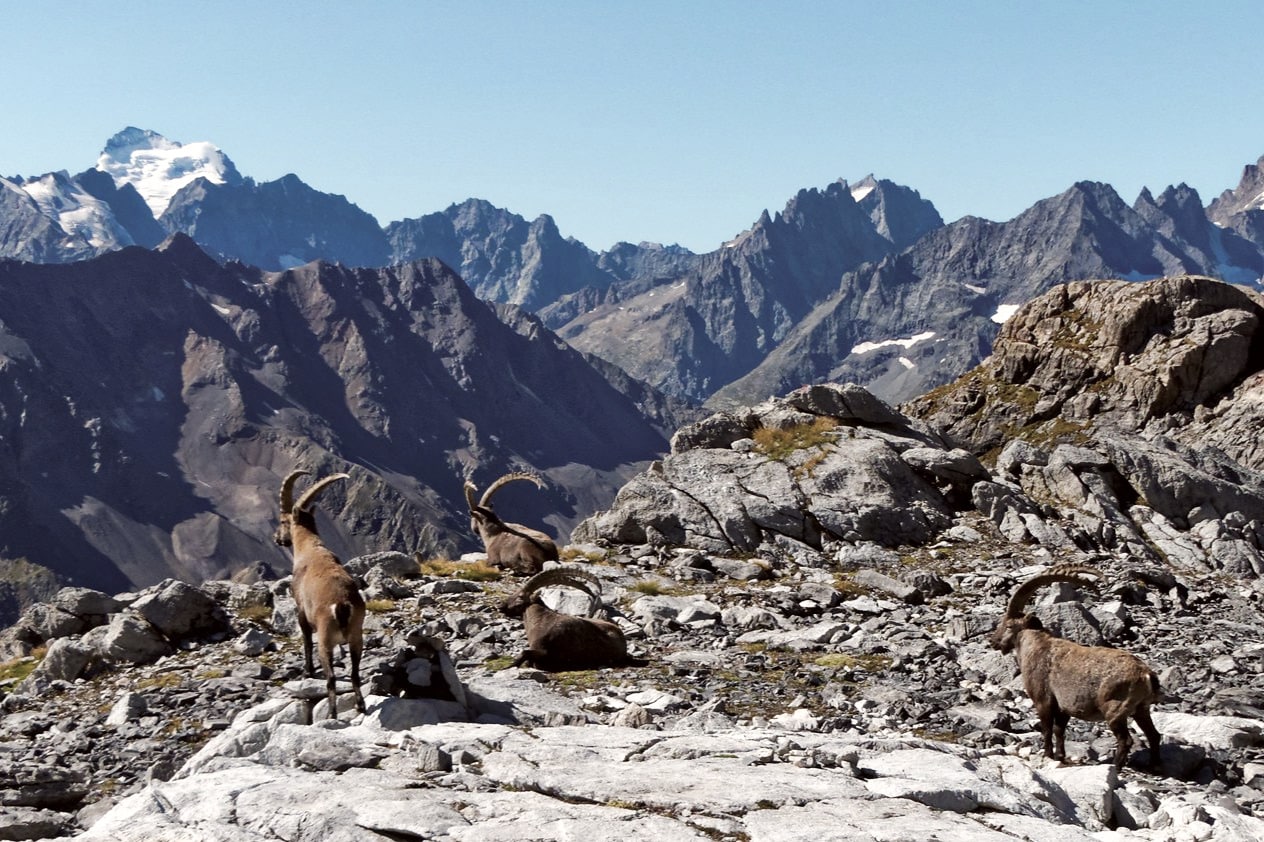
As the second highest mountain massif in France after Mont Blanc, the Écrins boast numerous glaciers, particularly on their northern flanks. From the mountain pass of the Col du Galibier, you enjoy a front-row seat to this natural spectacle. To the left rises the magnificent Barre des Écrins, to the right sits the jagged ridge of La Meije, and far behind you, the Mont Blanc massif cuts into the skyline. For more active travelers, hiking up the Grand Galibier from Plan Lachat offers this exact landscape from an even better vantage point, complete with a beautiful passage past Lake Cerces.
Tracing the Approaches of Mont Aiguille

An emblematic summit of the Vercors massif, Mont Aiguille was long considered completely inaccessible. It wasn’t until 1492 that human feet first stepped onto its plateau. King Charles VIII ordered Antoine de Ville, Lord of Dompjulien and a specialist in military sieges, to conquer this fortress-like mountain—an exploit many historians consider the birth of modern mountaineering. Today, route maps can easily be found to approach Mont Aiguille, but it remains a serious mountaineering endeavour. Hiring a qualified mountain guide is highly recommended.
Mont Ventoux: A Lunar Landscape Rising Above Provence

Standing at 1,909 metres, Mont Ventoux dominates the Provence plains and abruptly breaks the momentum of the regional Mistral wind. This “bald mountain,” stripped of vegetation by its altitude and climate, has become legendary through the Tour de France. Yet it is also a vital geographical anchor point for residents across the Rhône Valley, the Baronnies, and Vaucluse. While famously ascended by bicycle from Malaucène or more commonly from Bédoin, this long and punishing climb requires thorough physical preparation.
The Majestic Waterfalls of the Cirque de Saint-Même

Located at an altitude of 900 metres in the commune of Saint-Pierre-d’Entremont, the Cirque de Saint-Même serves as a major gateway to the Chartreuse Regional Natural Park. This vast limestone amphitheatre is enclosed by sheer cliffs rising 500 metres high. The landscape is defined by the resurgence of the Guiers Vif river, which feeds four successive waterfalls: the Cascade des Sources, the Grande Cascade, the Cascade Isolée, and the Pisse du Guiers. The site presents a striking contrast between the verticality of mineral walls and the luxury of the surrounding forest. Highly popular for its refreshing coolness in summer, the cirque features well-maintained trails providing easy access to the various waterfall tiers, making it an ideal family walk to observe the power of water carving through stone.
The Distinctive Ridgelines of the Vercors

The Vercors presents itself as an immense limestone plateau, a true natural fortress situated at the transition between the Northern and Southern French Alps. Its most characteristic landscapes are its linear rock barriers and wild high plateaus, which are protected as a National Nature Reserve. The most iconic element of this relief remains Mont Aiguille, an isolated limestone needle separated from the main cliffside by differential erosion. The terrain alternates between dense coniferous forests, alpine pastures, and spectacular gorges carved out by rivers over millennia. Terraced cliffside roads, such as those at Combe Laval, offer breathtaking views of the valleys far below. This mineral citadel stands as a sanctuary for biodiversity, where the demanding topography ensures discreet human presence, offering hikers panoramas of great geological sobriety.
Entre-deux-Eaux: The Most Preserved Valley of the Vanoise

At the heart of the Vanoise National Park, the Entre-deux-Eaux site marks the junction of several high-altitude glacial valleys. This landscape is dominated by the south face of the Grande Casse (3,855 m)—the highest peak of the massif—and its hanging glaciers. The valley floor features lush green meadows where alpine torrents meander, fed continuously by melting snow. It is a premier location for spotting classic alpine wildlife, including ibex and marmots, which thrive on these sunny slopes. This open, luminous panorama embodies the classic aesthetic of the high Savoie mountains, where the sharp verticality of snow-covered peaks contrasts beautifully with the soft alpine pastures below.
The Vallée des Merveilles in the Heart of the Mercantour

Tucked away at an altitude of over 2,000 metres in the Mercantour massif, the Vallée des Merveilles reveals a landscape of rock slabs polished smooth by ancient glaciers. The site is globally renowned for its 40,000 Bronze Age rock engravings, spread across open-air stone surfaces. Pristine glacial lakes, such as Lac Long and Lac Fourca, complete the panorama, framed by the jagged peaks of Mont Bégo. The complete absence of tree-level vegetation reinforces the raw, mineral, and timeless atmosphere of the valley. Accessible only on foot, this strict pedestrian access ensures the preservation of an archaeological sanctuary where a tormented geology serves as a showcase for some of the oldest human testimonies in the Alps.
An Panoramic View of Lake Annecy from the Col de la Forclaz

Overlooking a deep turquoise lake, this is one of the most celebrated natural sites in Haute-Savoie. From the vantage point of the Col de la Forclaz, the panorama across Lake Annecy is truly magnificent, offering exceptional views from May through the final colours of autumn. More ambitious hikers can ascend past the launch points toward La Tournette, the region’s iconic summit that delivers a full 360-degree view across the Northern Alps. For others, a short walk up to the Chalet de l’Aulp provides an ideal mountain stop to enjoy a meal and purchase traditional alpine Reblochon cheese straight from the farm.
Exploring the Gorges du Verdon: A Landscape of Canyons and Belvederes

Widely considered the largest canyon in Europe, the Gorges du Verdon stretch across 25 kilometres between Castellane and the Lake of Sainte-Croix. This monumental landscape resulted from the Verdon River carving deep into the limestone plateaus of Provence during the Tertiary era. The cliffs reach vertical depths of up to 700 metres, creating a mineral panorama of rare intensity. The water’s distinctive turquoise hue is caused by micro-algae combined with the white limestone riverbeds. The site can be explored along the famous Route des Crêtes, which is punctuated by steep lookout points offering plunging views of the riverbed below. The landscape beautifully combines geological power with unique local biodiversity, making the Verdon a global reference for rock climbing and outdoor tourism.
The Mont Blanc Massif from the Aiguille du Midi
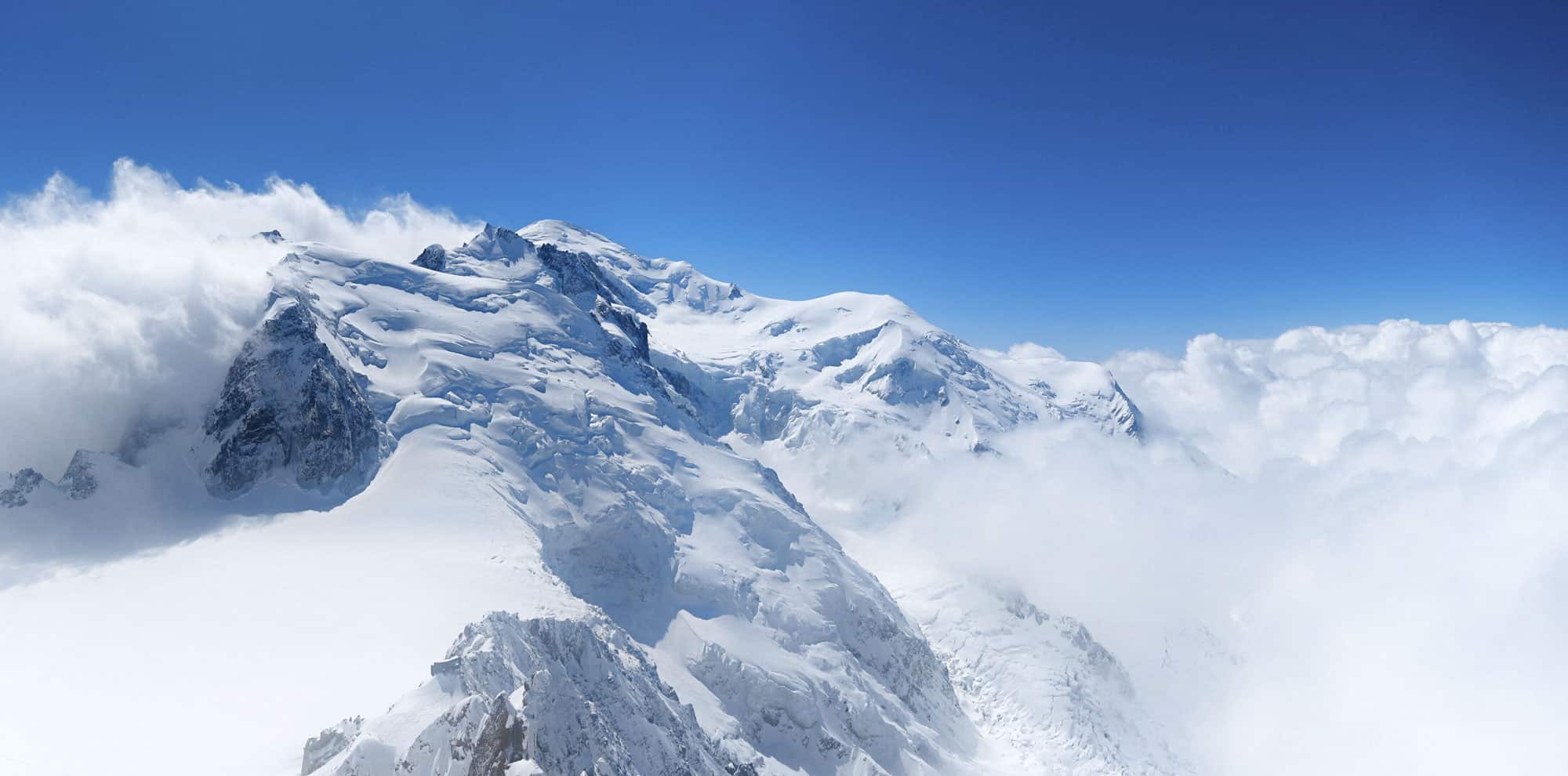
At an altitude of 3,842 metres within the realm of perpetual snows, the Aiguille du Midi offers effortless access to an exceptional glacial landscape—a real-world postcard of stunning scale. For those visiting during winter or early spring, the ultimate adventure remains skiing down the famous Vallée Blanche with a guide. At the top of the cable car station, an alpine museum, a glass skywalk (“Step into the Void”), and several viewing platforms cater fully to non-mountaineers. To extend your itinerary, consult our comprehensive guide on what to do during a stay in Chamonix.
Gazing Over the Mer de Glace from Montenvers

It is difficult to comprehend that only a few decades ago, visitors could admire a massive, thriving glacier directly from this spot. At this unique natural site—undoubtedly one of the most famous landmarks in the French Alps—a poignant chapter of climate memory tourism is currently unfolding. Yet, beneath this river of grey surface rocks, the glacier remains. While tens of metres of ice persist, the glacier retreats further each year. This landscape holds a distinct melancholy, though the historic journey up the mountain via the Montenvers rack railway remains an exceptional experience.
From Pré de Madame Carle to the Écrins Glaciers

Glaciers are not exclusive to the Mont Blanc region; those of the Écrins massif continue to endure. In the Vallouise Valley, home to one of the most beautiful villages in the Hautes-Alpes, hikers can easily reach the front edge of the Glacier Blanc. For mountaineering enthusiasts, climbing the iconic Barre des Écrins stands as a great classical route, remaining without a doubt one of the most beautiful and rewarding high summits in France.