The Mont Blanc Tunnel is a vital artery between France and Italy — but it is also synonymous with queues, maintenance closures and high tolls. At around €70,4 return in 2026, and with regular night closures for safety works, many drivers are looking for an alternative. Whether you want to save money, avoid the anxiety of 11.6 km underground, or simply turn a transit into a scenic Alpine journey, alternatives exist. The right choice, however, depends entirely on the season and your origin and destination.
Why Avoid the Mont Blanc Tunnel?
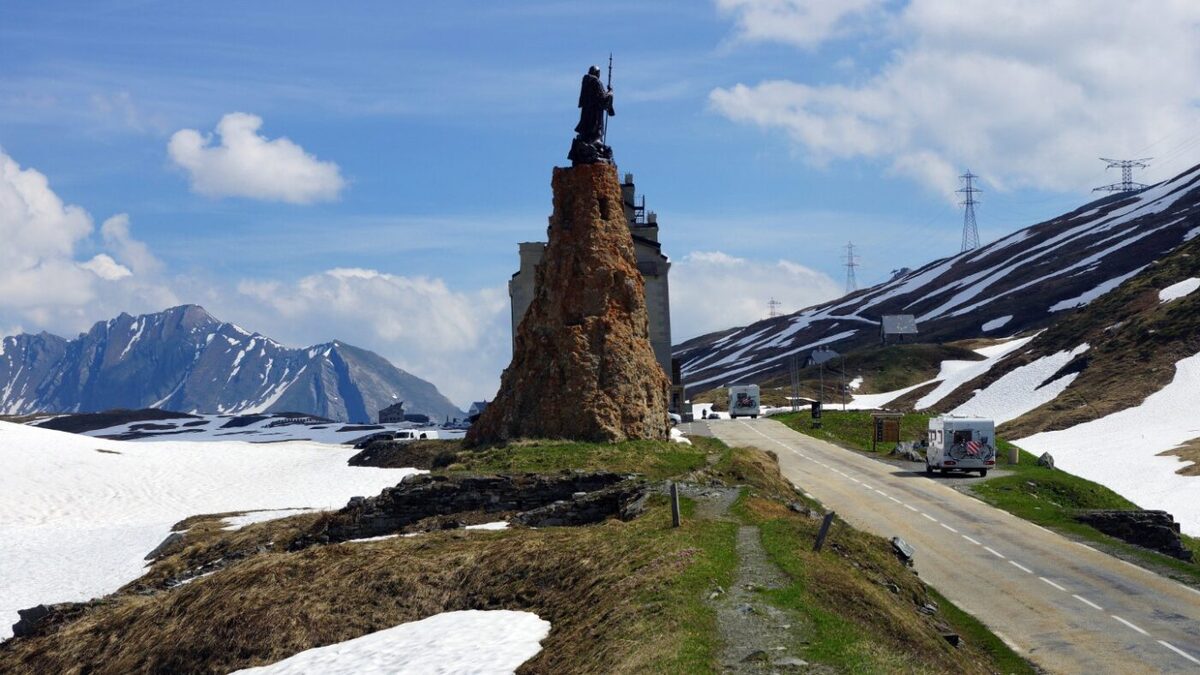
Three reasons regularly push drivers to look for another route. The first is cost: at approximately €70,4 return (2026 prices), the Mont Blanc Tunnel toll is a significant expense for any road trip to Italy. The second is traffic: the tunnel is frequently congested — particularly during French school holiday departures, peak ski weekends and whenever the Fréjus Tunnel closes for its own maintenance, forcing traffic to divert here. And the third is the tunnel itself: 11,611 metres of underground road with no view, no daylight and no margin for distraction. For many drivers, especially those towing caravans, a mountain pass in good weather is far preferable.
Winter: Options When the Mountain Passes Are Closed
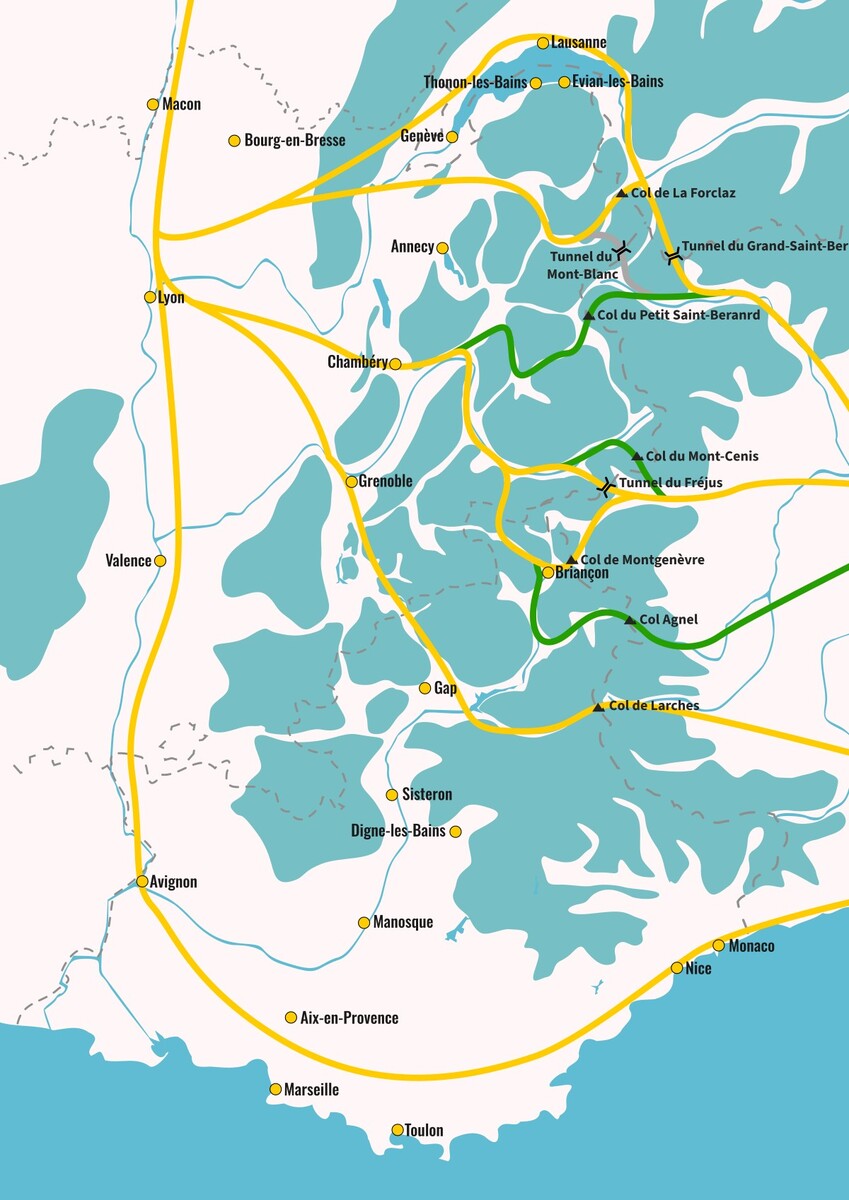
In winter, when snow closes the high-altitude passes, the options for crossing from France to Italy by road narrow considerably. The reliable alternatives are:
- The Fréjus Tunnel (Savoie) — the most logical alternative for those heading to Turin or Milan. Via the Maurienne valley (A43 motorway), the Fréjus Tunnel connects Modane (France) to Bardonecchia (Italy). It carries a similar toll to the Mont Blanc Tunnel (around €55,5 one way) but is significantly faster for northern Italy than any other option, and involves no detour from Chambéry or Lyon.
- The Grand Saint-Bernard Tunnel (via Switzerland) — a viable option for those heading to the Aosta Valley. The route runs via Martigny in the Swiss canton of Valais, often via the Col de la Forclaz (generally kept open in winter), then through the Grand Saint-Bernard Tunnel (open year-round). Note: this route requires a Swiss motorway vignette (around €42, valid for one year) plus the Grand Saint-Bernard tunnel toll (around €52 return). It is rarely cheaper than the Mont Blanc Tunnel for a simple return trip unless you are already in the Geneva–Chamonix corridor.
- The Southern Alps options (Col de Larche, Col de Montgenèvre, Côte d’Azur motorway) — viable for those starting from south-east France. The Col de Larche (1,991 m), linking Barcelonnette to Cuneo, is generally kept open in winter except in extreme conditions. The Côte d’Azur motorway route via Ventimiglia avoids the mountains entirely but is dramatically longer, involves significant French and Italian motorway tolls, and is almost never economical compared to a direct tunnel crossing.
Summer: The Season for Scenic Alpine Crossings
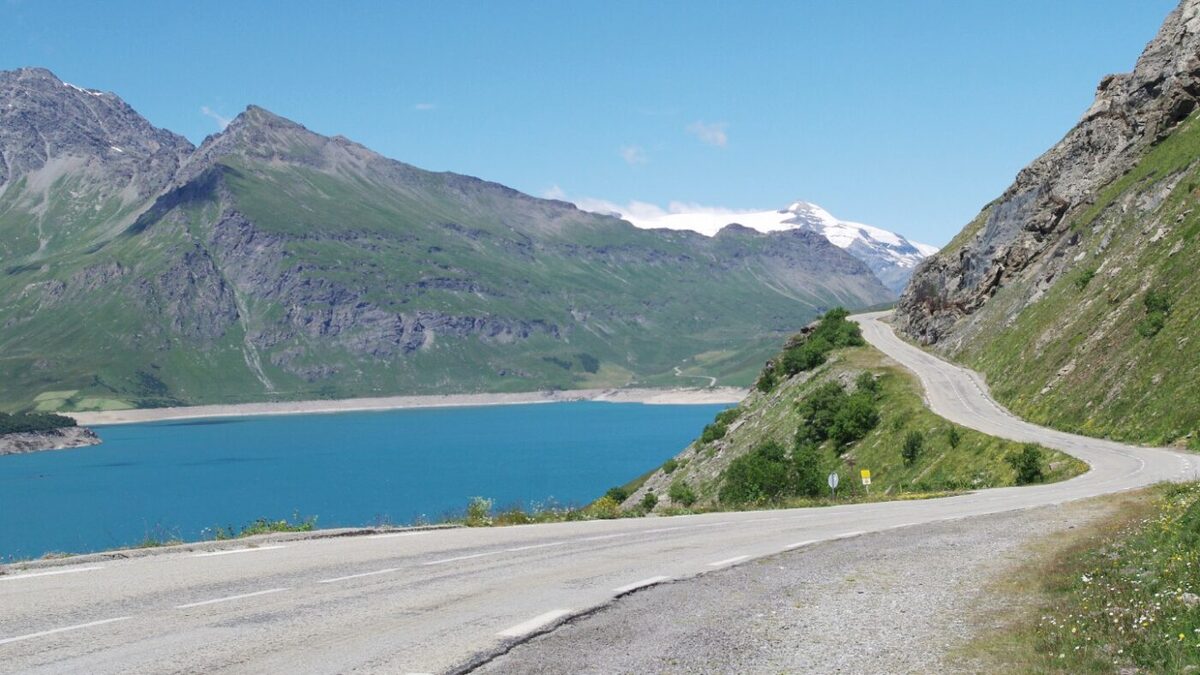
From May to late October, the Alps open up a range of magnificent free alternatives. These mountain passes are popular with touring drivers, motorcyclists and cyclists — and make the crossing itself a highlight of the journey rather than something to endure:
- Col du Petit-Saint-Bernard (2,188 m) — Tarentaise: the most geographically direct alternative to the Mont Blanc Tunnel. The road climbs from Bourg-Saint-Maurice in the Tarentaise valley — just 30 km from Chamonix — and descends directly into the Aosta Valley in Italy. Spectacular scenery, entirely free, and logistically natural for anyone already in the Chamonix or Tarentaise corridor.
- Col du Mont-Cenis (2,083 m) — Maurienne: famous for its deep turquoise reservoir lake at the summit, the Mont-Cenis pass provides access to the Susa valley on the Italian side — not far from the Italian end of the Fréjus Tunnel. A good option if you are coming from Chambéry or Lyon via the Maurienne.
- Southern Alps passes (Col Agnel, Col de Larche and others): useful for those exploring the southern French Alps and heading towards Cuneo, Turin or the Italian Riviera from that direction.
Whatever route you choose, always check current road conditions and pass opening status before departure — conditions can change rapidly in the Alps, even in summer. Google Maps and Waze both offer real-time routing; selecting “avoid toll roads” will automatically route you via the passes rather than the tunnels.
FAQ
Check in real time via the official ATMB website (the tunnel operator) or navigation apps such as Google Maps and Waze. The tunnel is regularly closed at night for maintenance — typically between 23:00 and 06:00 — and occasionally for longer periods. Planned closures are published well in advance on the ATMB website.
Yes — passes such as the Petit-Saint-Bernard and the Mont-Cenis are generally open 24 hours a day during their summer season (approximately May/June to October), unless there is exceptional weather such as snow or a violent storm. Always check conditions before a night crossing.
The Col du Petit-Saint-Bernard and the Col du Mont-Cenis are wide, well-maintained roads that are suitable for motorhomes. Progress will be slower than on a motorway. For caravans, the passes are generally manageable but require care on tight hairpin bends; some cols have specific restrictions — always check before departure.
The cheapest option is always a mountain pass — the Col du Petit-Saint-Bernard, the Col du Mont-Cenis or the Col de Larche are all free of charge (available summer only). Beware of seemingly cheap alternatives: the Grand Saint-Bernard via Switzerland requires a Swiss vignette (around €42) plus the tunnel toll (around €52 return), making it more expensive than the Mont Blanc Tunnel for a short trip. The Côte d’Azur motorway route appears free of mountain tolls but the combined distance, French and Italian motorway costs and extra fuel almost always make it the most expensive option overall.
Approximately €55,5 one way and €70,4 return for a standard car in 2026. Prices vary by vehicle type and season. Check the official ATMB website for current fares.
In summer, the Col du Petit-Saint-Bernard is ideal — free, scenic and drops you directly into the Aosta Valley. In winter, the Grand Saint-Bernard Tunnel via Switzerland is the most direct option, though it involves a Swiss vignette and tunnel toll.
Absolutely — and it is often the best option. If you arrive late or the tunnel is closed for maintenance, Chamonix makes an excellent overnight stop before continuing into Italy. The Rocky Pop (from €69, open year-round) and the Cosmiques Hôtel (from €80, open year-round) are the most flexible options for a last-minute or spontaneous stop, with good availability outside peak season. For something more comfortable, the Heliopic and Les Aiglons both offer year-round opening and are close to the valley road. See our full guide to the best hotels in Chamonix for the complete selection with prices and booking links. Check real-time tunnel status and scheduled closures at tunnelmb.com before departure.